From "Wait and See" to "Hike": What the Fed Minutes Mean for Treasury Yields and Mortgage Rates

The Fed went from holding to hiking in seven weeks. Here's what that shift means for Treasury yields and mortgage rates, and why a pause may not bring relief.
Key Takeaways
- The Fed’s thinking changed in seven weeks. In July, it held rates on a 9–3 vote and wanted more information. In September, it raised rates unanimously, and most officials expected another increase by year-end.
- The votes matched, but the reasons didn’t. Many officials framed the hike as insurance against persistent inflation. Others said their baseline outlook already required tighter policy. Those different rationales could shape how officials respond to incoming data, but both leave room for further hikes.
- What it means for housing: a pause won’t automatically lower mortgage rates. Over the past week, short-term yields fell while the 10-year rose. Mortgage rates follow the long end, and the long end is responding to more than the Fed.
What changed between July and September
In July, the Fed held its target range at 3.50%–3.75%. Three voters dissented in favor of a hike. Most officials wanted another round of data to see whether inflation would ease.
By September, they had seen it, and they didn’t like it. Officials said they “had not seen sufficient progress” on inflation. Several said the economy’s underlying momentum had picked up. Almost all judged that risks to the job market had faded and were now roughly balanced. The Fed raised rates to 3.75%–4.00% on a 12–0 vote.
| July meeting | September meeting | |
|---|---|---|
| Decision | Held at 3.50%–3.75%; three dissents for a hike | Raised to 3.75%–4.00%, unanimously |
| Further hikes | Many said tightening would be needed if inflation didn’t fall | Most expected another hike by year-end |
| Is policy tight enough? | Some said financial conditions might not be restrictive enough | Several said policy is not restrictive or only mildly so; a couple raised their neutral-rate estimate |
| Staff: inflation back to 2% | About 2028 | Pushed to 2029 |
| Staff: growth outlook | A touch weaker than June | Stronger than July; above potential through 2028 |
| Staff: risks to jobs and growth | Tilted to the downside | Roughly balanced |
| Business pricing | A couple saw firms absorbing costs; a couple saw consumers resisting | Some saw firms passing costs on more successfully |
| Market-implied rate volatility | Largely unchanged | Up somewhat for longer-term rates |
The bottom line: persistent inflation plus a resilient economy changed the Fed’s math. Officials became less worried that higher rates would hurt the job market, and more worried that inflation would stick.
Same vote, different reasons
Many officials described the hike as insurance against inflation staying high, or against another supply shock. A number of participants said their central forecast required it.
The distinction concerns why officials favored tighter policy: some emphasized the risk of inflation proving more persistent than expected, while others judged a higher rate path necessary under their baseline outlook. It does not establish separate camps committed to pausing or continuing to hike. Both approaches remain sensitive to incoming data.
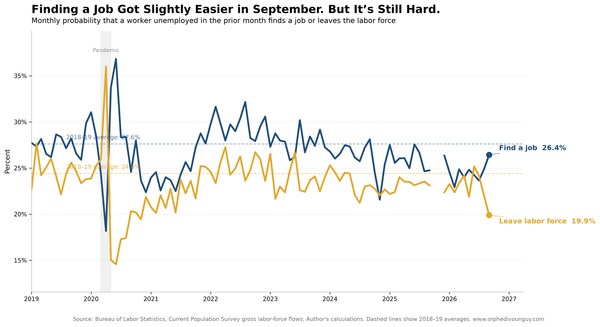
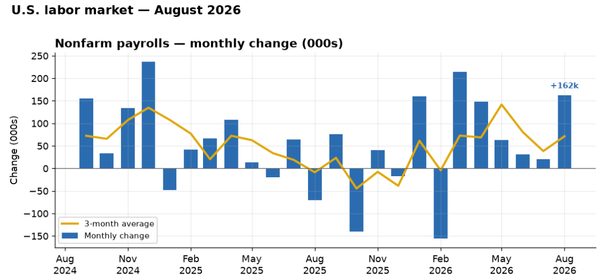
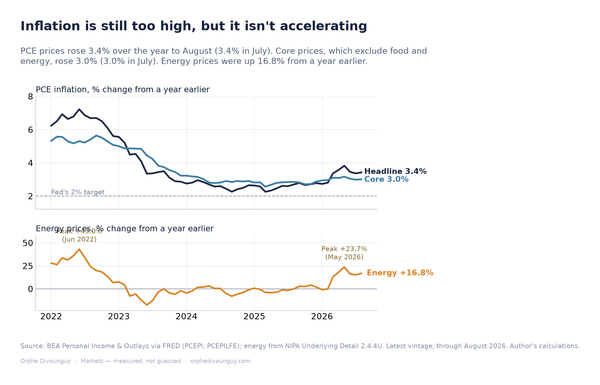
In my assessment, the data released since the meeting strengthen the case for waiting. September payrolls rose just 29,000, downward revisions to July and August brought the three-month average to about 51,000, and unemployment edged up to 4.2%. Annual wage growth slowed to 3.0%, and August PCE inflation came in below expectations. None of this points to an overheating economy, and markets now see an October hike as unlikely. The minutes describe a committee that had not yet seen these numbers.
What it means for Treasury yields
Yields have climbed sharply. As of this afternoon on October 7, the 2-year was 4.77%, the 10-year 5.29% and the 30-year 5.67%.
The 10-year is now 54 basis points above its July 31 level. The decomposition through October 5 shows that real yields accounted for 48 basis points of the 56-basis-point increase recorded by that date. Inflation compensation rose just 8 basis points. The 30-year real yield reached 3.37% on October 5, its highest since the series began in 2010.
The increase was concentrated in TIPS real yields, consistent with higher expected real short-term rates, a higher real term premium, or both. Inflation compensation rose much less. Separately, ACM and Kim–Wright estimate how nominal yields divide between expected short rates and term premiums; those estimates are model-dependent.
The Fed’s two decision days illustrate how those forces can pull yields in different directions:
- July 29, a hold with three dissents: the 2-year fell 4 basis points, while the 10-year rose 6 and the 30-year rose 11. Longer-term inflation compensation increased. The New York Fed’s ACM model estimated that the expected short-rate component fell while the 10-year term premium rose. One possible explanation is that the hold reduced expectations for near-term tightening but increased concern about persistent inflation and longer-term interest-rate risk.
- September 16, the hike: the 2-year rose 7 basis points, the 10-year rose just 1 and the 30-year fell 1. Longer-term inflation compensation declined. The ACM model estimated that a higher expected short-rate component was largely offset by a lower term premium. One possible explanation is that investors expected tighter policy while becoming more confident that inflation would be contained.
These are interpretations, not isolated estimates of the Fed’s effect. Daily movements also reflect other news. But the contrast illustrates why a hike can raise short-term yields without pushing longer-term yields up by the same amount.
Between September 28 and October 5, the 2-year yield fell 8 basis points while the 10-year rose 7. That pattern is consistent with reduced expectations for near-term tightening alongside upward pressure on longer-term yields, but it does not identify the causes. Over the separate September 25–October 2 window, both models estimated rising 10-year term premiums, while disagreeing about the expected-rate component.
The September minutes reported market commentary pointing to geopolitical developments, uncertainty surrounding Treasury buybacks and heavy AI-related debt issuance as possible contributors to higher term premiums and Treasury yields.
Lower expectations for near-term Fed tightening can therefore coexist with higher long-term Treasury yields when rising term premiums outweigh any decline in the expected-rate component.
What to watch: September CPI and PPI are the Fed’s last major inflation reading before the October 27–28 decision. Historically, the reports associated with the largest bond-market moves have shifted with the economic environment. CPI reports have been especially influential when the Fed was more concerned about inflation. Our expectation is that CPI releases will be important sources of volatility now. A hotter-than-expected report could push yields and mortgage rates higher; a softer report could provide some relief but not much.
What it means for housing: a Fed pause may not bring mortgage-rate relief
Mortgage rates respond to longer-term Treasury yields and pricing in the mortgage-backed securities market. Freddie Mac’s weekly average rose from 6.66% on July 30 to 7.28% on October 1. Using Treasury yields aligned to those weekly observations, the 10-year increased about 56 basis points, while the mortgage–Treasury spread widened about 6. Most of the increase in mortgage rates came from the rise in Treasury yields.
For a $425,000 home with 20% down, that move raises the monthly principal-and-interest payment from about $2,185 to $2,326. That’s roughly $140 more a month, or about $1,700 a year. Put differently, a buyer keeping the same payment can borrow about 6% less.
For sellers, higher rates could mean accepting a lower offer, providing concessions or waiting longer for a buyer. I still expect more sellers to return in spring 2027, but my baseline is that supply will remain tight enough to limit broad price declines. That outlook depends on how many buyers remain active; a sharper pullback in demand could push prices lower even without a surge in listings.
The Fed sees it too. The September minutes say home-purchase borrowing remained depressed. A few officials singled out housing as the one sector where financial conditions are not supporting activity.
An October Fed pause would not guarantee mortgage-rate relief. Markets already expect one, so relief would depend on investors revising down the expected path of future policy rates — through softer data or a shift in Fed guidance. But resilient growth and strong investment demand could keep expected real rates elevated, and rising term premiums could offset any decline. Mortgage spreads would also influence how much relief reaches borrowers.