Americans Feel Worse About Today, Slightly Better About Tomorrow

Key Takeaways
- Current conditions fell sharply. Michigan’s current-conditions index dropped 6.2 points to 44.7, a decline that large has occurred roughly once every fifteen months since 1978.
- The outlook improved slightly. Expectations rose from 46.3 to 47.3, as consumers grew a bit more optimistic about their finances and business conditions over the coming year.
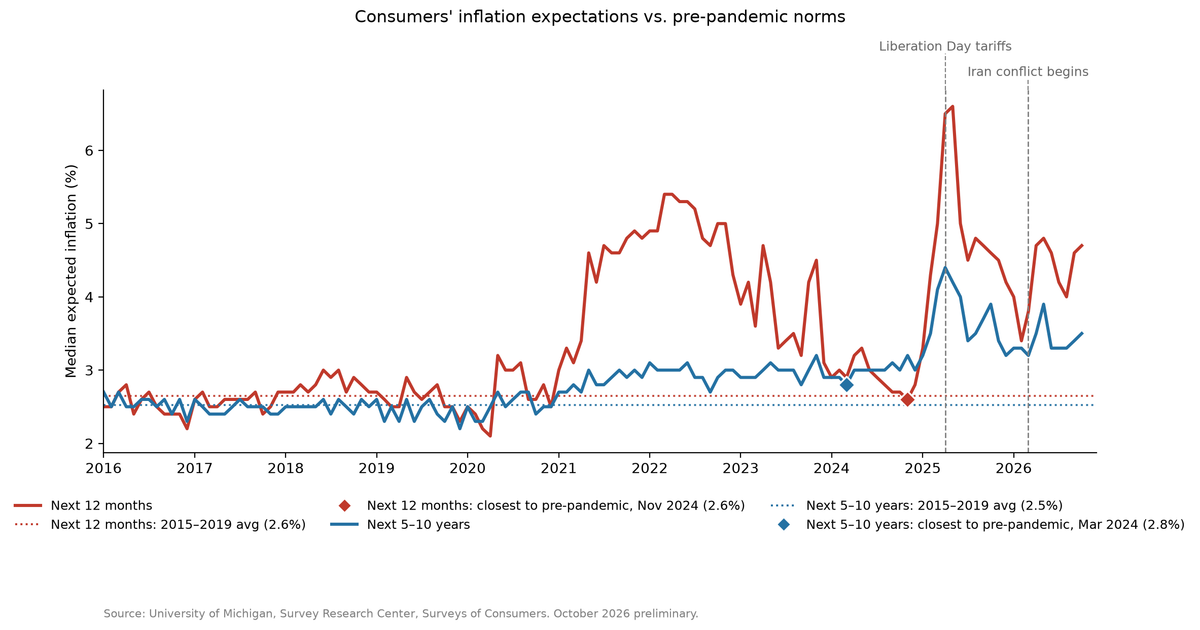
- Inflation expectations edged up. Year-ahead expectations reached 4.7% and long-run expectations 3.5%, both the highest since May.
- Budgets are under pressure. The survey points to squeezed households, not to rising inflation expectations generating stronger demand.
Consumer sentiment edged down in October, but the headline hides a sharper divide: Americans felt worse about current conditions and slightly better about the outlook.
The University of Michigan’s preliminary sentiment index fell to 46.3 from 48.1 in September. Its current-conditions index dropped from 50.9 to 44.7, while expectations rose from 46.3 to 47.3. Consumers were slightly more optimistic about their finances and business conditions over the coming year.
The 6.2-point decline in current conditions was unusually large. In our analysis of monthly changes since 1978, declines at least that large occurred roughly once every fifteen months.

Michigan reported a sharp deterioration in buying conditions for appliances, furniture and other major household goods amid high prices and borrowing costs. Sentiment also fell steeply this month among lower-income consumers and those with smaller stock portfolios.
Inflation expectations rose slightly. Year-ahead expectations increased from 4.6% to 4.7%, compared with 3.4% in February before the Iran conflict began. Expectations over the next five to ten years rose from 3.4% to 3.5%. Both reached their highest readings since May.
Since February, the increase has been much larger in near-term expectations: 1.3 percentage points, versus 0.2 points for the longer horizon. October’s monthly increases were small, and the preliminary results could change.
Why it matters. Expectations of higher prices can encourage consumers to buy sooner, adding to inflation pressure. But squeezed budgets—due to higher prices and higher borrowing costs—can push them to cut back instead. Michigan’s separate report finds evidence of both responses, with many consumers planning to reduce purchases of goods experiencing large price increases.
My reading: this survey points to pressure on household budgets, with only a modest improvement in the outlook. It does not establish that rising inflation expectations are generating stronger demand.
The final October reading is scheduled for October 23.
Source: University of Michigan, Survey Research Center, Surveys of Consumers. October figures are preliminary. Historical comparison: author’s calculations.