In 2017, $20,000 Could Buy a Home in 181 Metros. Today, Nine.


Key Takeaways
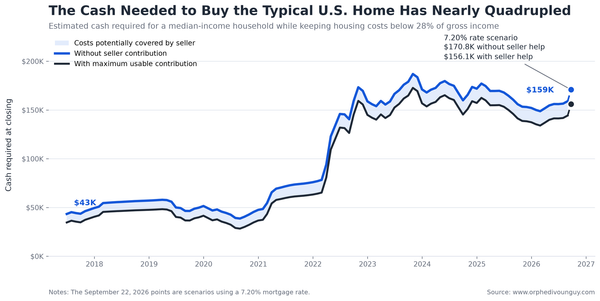
- Affordability has narrowed to a handful of markets. A median-income household with $20,000 to close could buy the typical home in 181 metro areas in 2017; today it can in nine.
- Seller credits barely help. Contributions up to the usable limit lift the count only to 194 in 2017 and 11 today.
- 2022 was the turning point. Prices had already climbed, and rising mortgage rates then pushed monthly payments beyond what incomes could support.
- Credits fix cash, not payments. Seller assistance can close a cash-to-close gap but not a monthly-payment gap, which is why 311 of 378 metros now fail the payment test at every tier.
In 2017, a median-income household with only $20,000 in total cash available at closing could buy the typical home in 181 metro areas. Today, it can do so in nine.
Even if the seller is willing to contribute up to the full usable limit, the number rises to only 11.
I looked at 378 metro areas using two tests:
- The buyer brings no more than $20,000 in total cash to closing—not a $20,000 down payment.
- The monthly housing payment cannot exceed 28% of gross income.
Buyer cash must cover the down payment, closing costs and prepaids. Seller credits can offset eligible costs, up to the applicable conventional limit.
What the tests show
In January 2017, 181 metros passed both tests without seller assistance. Allowing seller credits up to the full usable limit increased the count to 194.
By August 2026, those numbers had fallen to nine and 11.
| Scenario | January 2017 | August 2026 |
|---|---|---|
| No seller assistance | 181 | 9 |
| Seller credits to full usable limit | 194 | 11 |
The 2022 break
The break came in 2022. Home prices had already risen sharply. Then mortgage rates increased, pushing monthly payments beyond what household incomes could support. Seller credits can solve a cash-to-close problem. They cannot solve the monthly-payment problem.
Today, 311 of the 378 metros fail the monthly-payment test at every down-payment tier modeled. Another 56 pass the payment test but require more seller assistance than the applicable limit permits.
For most markets, this means only higher-income households with more cash on hand can transact. For a median-income household with only $20,000 available at closing, the price has to come down by a lot.